Welcome to Mechanical Engineering PhD candidate Zoë Masters – the newest addition to the MMD lab (officially joined in December)! Zoë will be focusing on experimental mechanics for both living and synthetic materials.
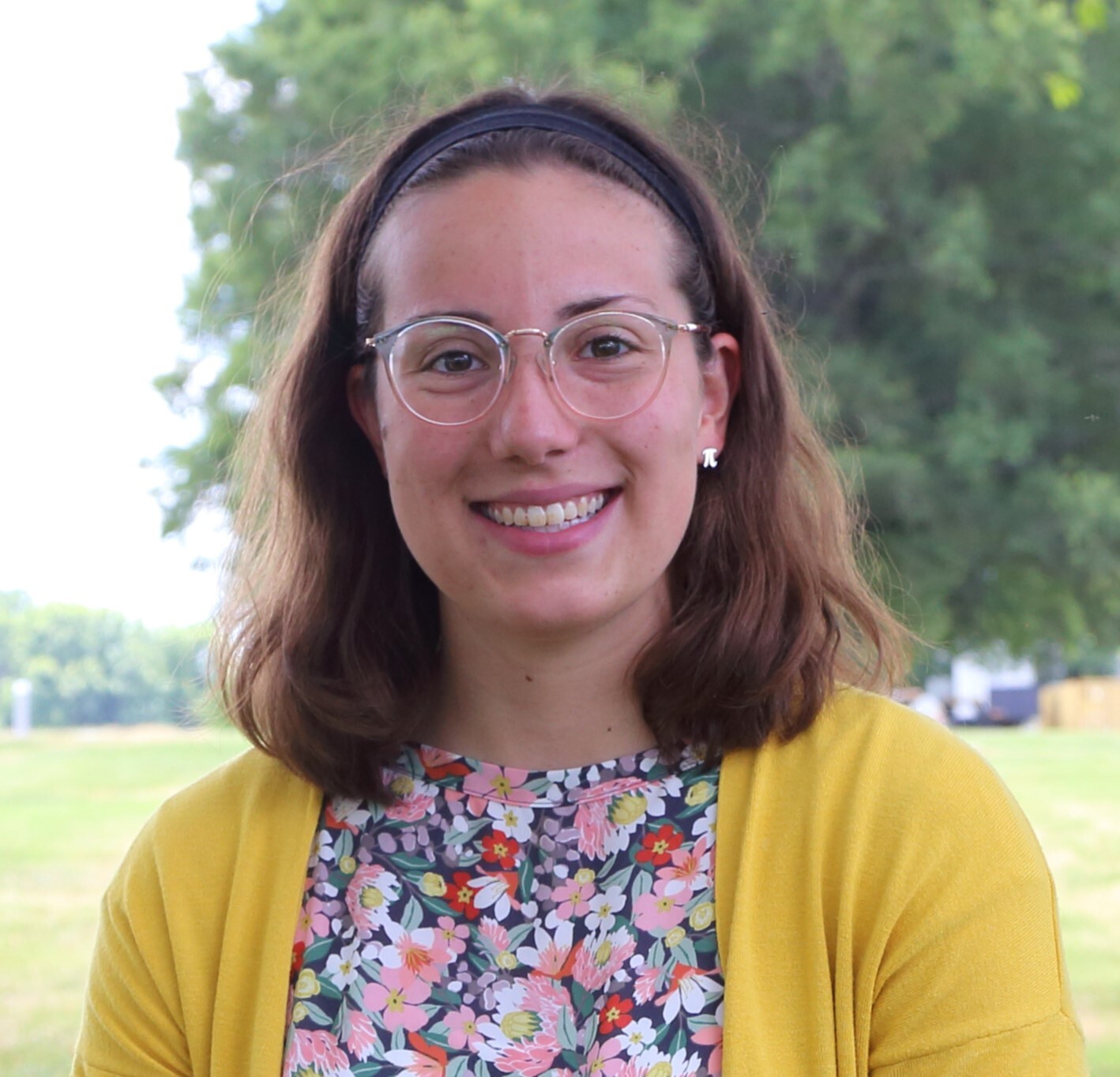
Welcome to Mechanical Engineering PhD candidate Zoë Masters – the newest addition to the MMD lab (officially joined in December)! Zoë will be focusing on experimental mechanics for both living and synthetic materials.
Ellen van Wijngaarden and Meredith Silberstein have a new paper out in Materials Advances on scalable manufacturing with freeform deposition of mycelium-bound composites. This work is in collaboration with the Wisniewska lab in Cornell’s Architecture department.

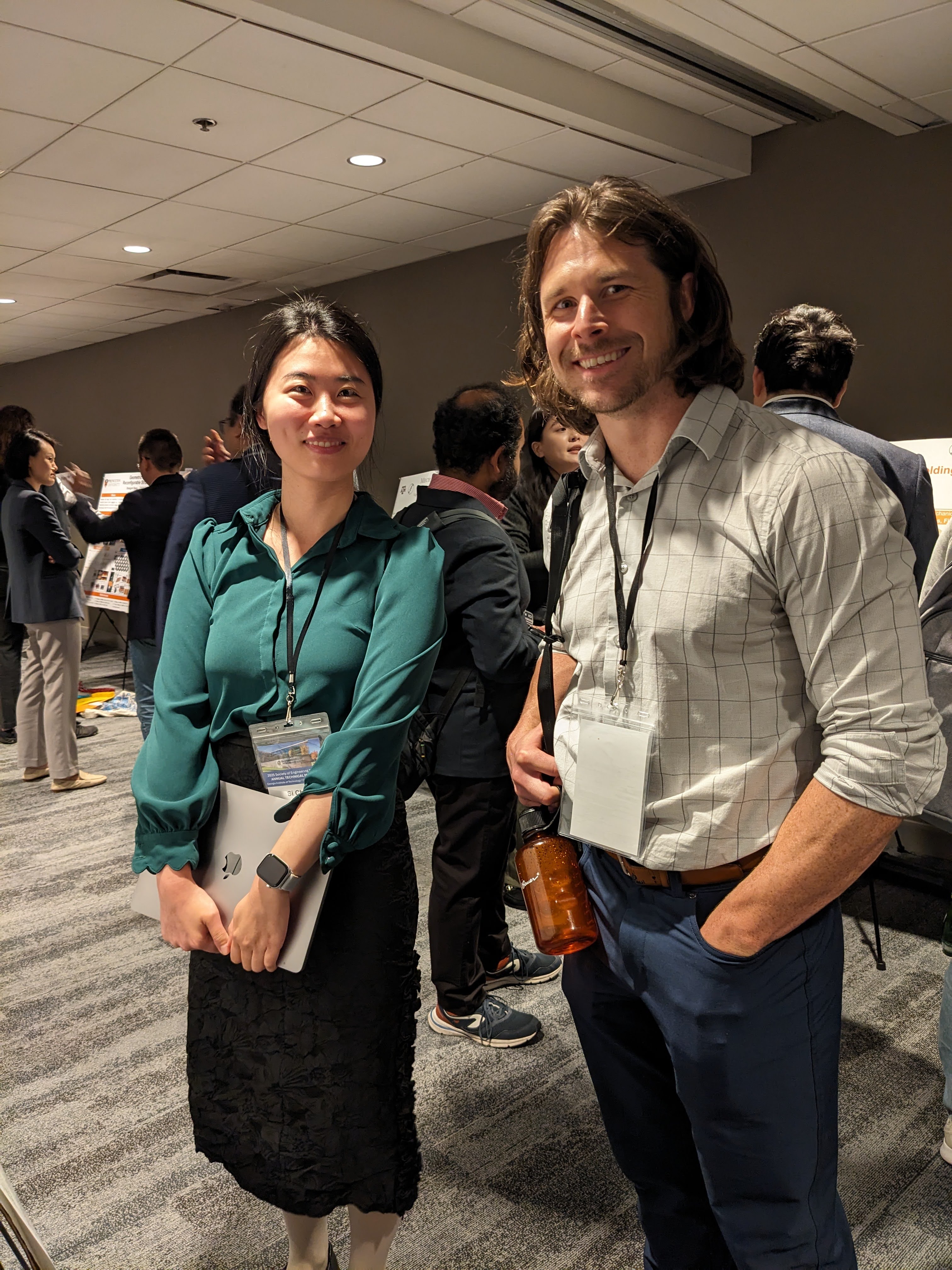
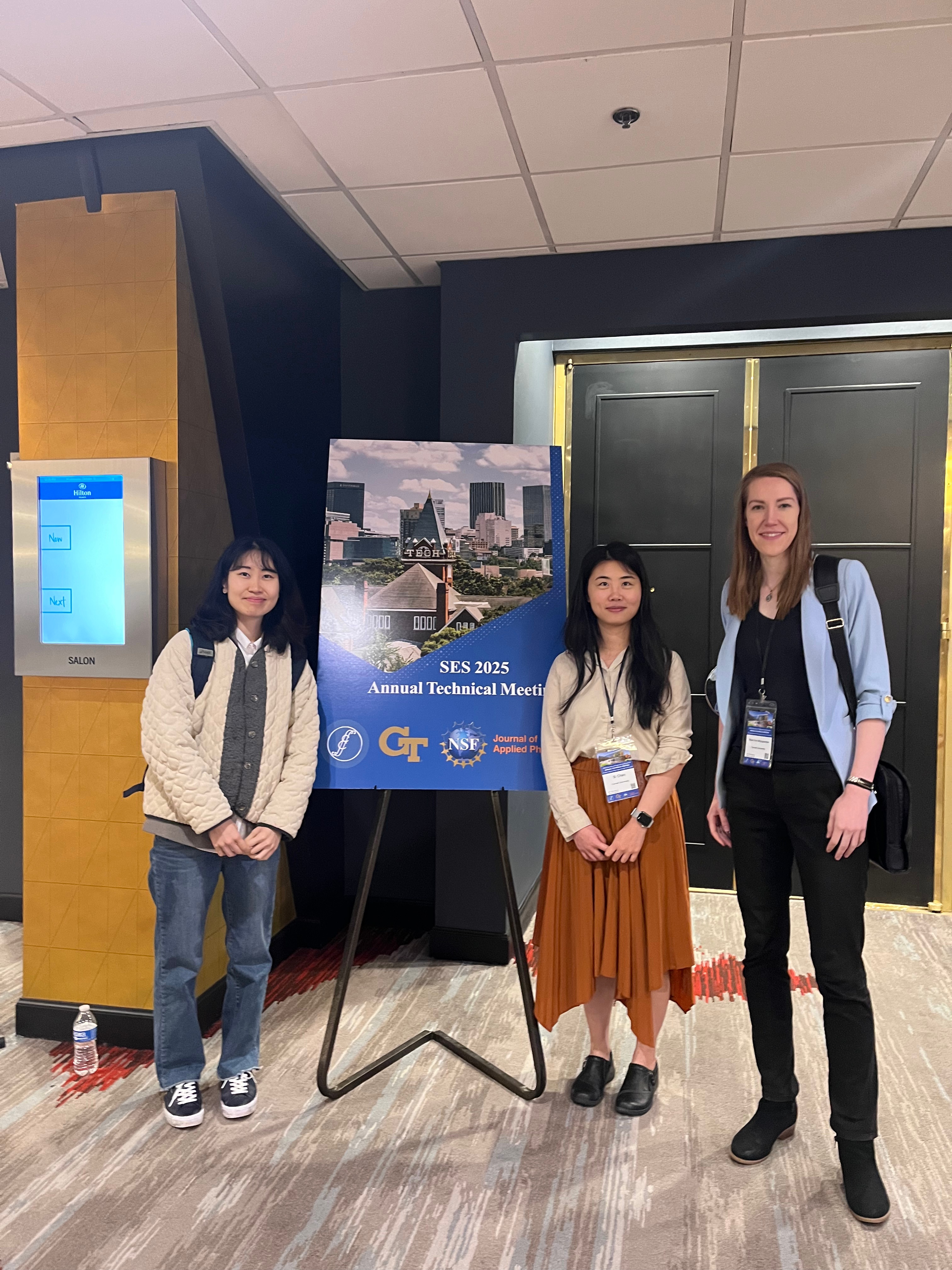
MMD lab members Ellen van Wijngaarden, Si Chen, Jaehee Lee, and Meredith Silberstein all presented at the Society of Engineering Science annual technical meeting in Atlanta last week. The team also caught up with MMD alumni Rob Wagner (now faculty at Binghamton University) and Allison Rzepka (now a PhD student at University of Illinois)!
Our lab is excited to share that Dr. Si Chen, ELMI and Fleming Postdoctoral Fellow, is the first author of our new paper, “Fibrous network nature of plant cell walls enables tunable mechanics for development,” published in Nature Communications.
This interdisciplinary study, at the interface of solid mechanics and plant developmental biology, was made possible through collaborations fostered by the Engineered Living Materials Institute (ELMI).
In this work, we show that plant primary cell walls behave like nonlinear fibrous networks, allowing them to stretch, reorient, and adapt their structure. Using both experiments and modeling, we uncovered the deformation mechanisms behind this behavior, examined how cell wall mechanics change during growth, and explored a mutant with altered leaf shape.
Together, these findings reveal how the fibrous architecture of cell walls provides tunable mechanical properties, enabling plants to adjust growth in ways that support proper development.
Congratulations to Si and the team for this exciting step toward engineering living systems into functional, sustainable materials! Special shout out to co-author and former MMD undergrad Bex Pendrak (now a Mechanical Engineering PhD candidate at Columbia University) for initiating this collaboration.
A new paper, “Harnessing ionic complexity: A modeling approach for hierarchical ionic circuit design” is now out in APS Physical Review Applied and was led by Dr. Max Tepermeister. In this work, we developed a flexible circuit-like model for designing and understanding the behavior of ionic circuitry. Our model allows designers to approach ionic circuitry from a materials focused or device focused perspective, and gives new insights into transient behavior, circuit memory, and circuit stability; all while solving ionic circuits many times faster than realtime. We have also released our work as an open-source library for the modelica systems language, which we hope the ionic community will build on.
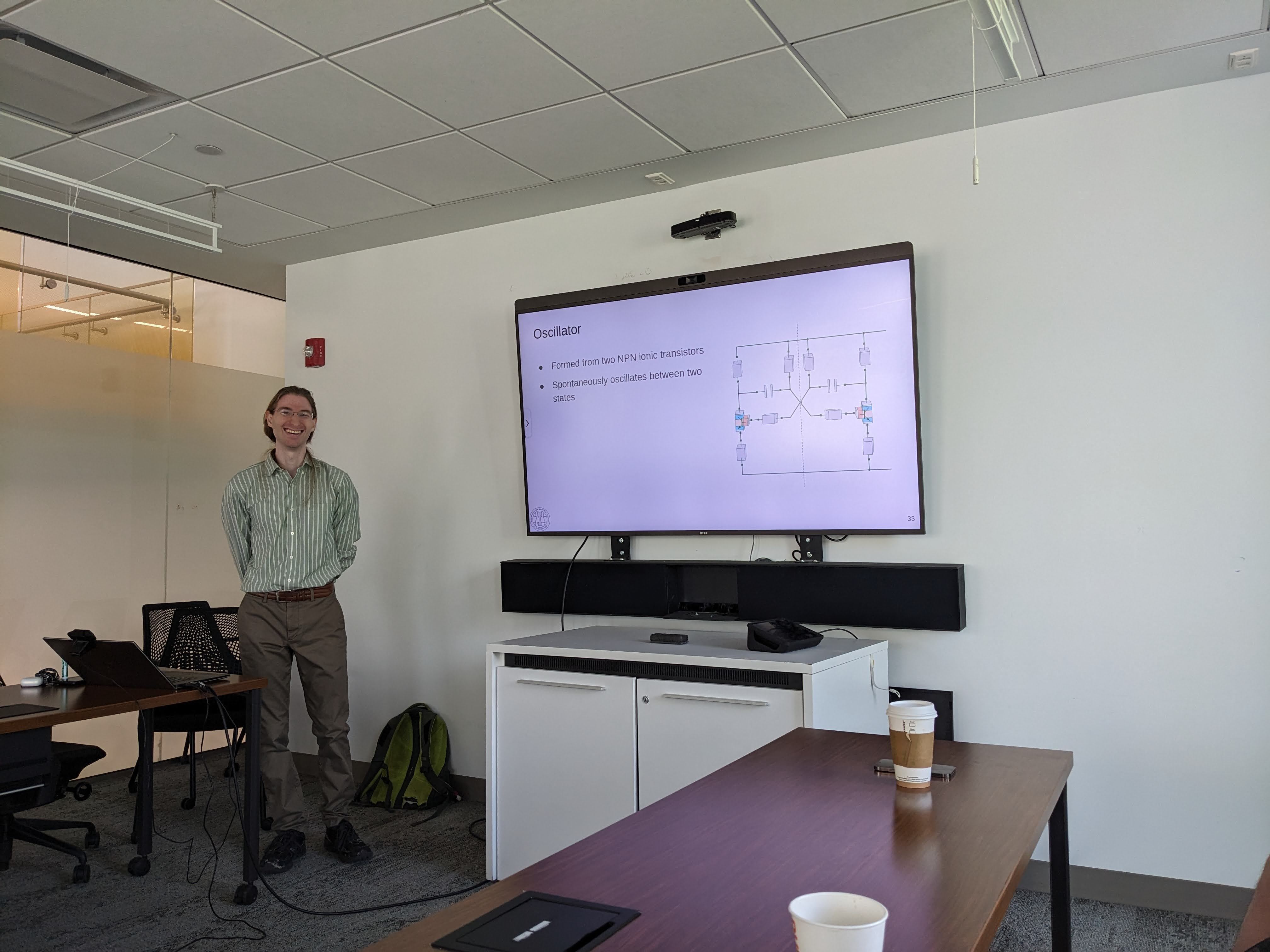
Dr. Max Tepermeister successfully defended his PhD thesis “Ionic and Chemical Systems Modeling”. He’ll be starting this fall as the Cecil and Sally Drinkward Postdoctoral Fellow at Caltech.
Work led by the newly minted Dr. Cai is now published in Materials Horizons. In “Regulating hydrogel mechanical properties with an electric field,” Dr. Cai designs a gel that is stable despite having strong saloplasticity (getting 5x stiffer when all of the salt is removed) and then shows how external electric fields can be used to regulate stiffness by regulating salt transport. He then demonstrates how this innovation could be applied for haptic devices. Max Tepermeister helped with system design and a special thanks co-author to Chenyun Yuan from Prof Ober’s group for sharing his scanning electron microscopy expertise.
Congratulations Dr. Hongyi Cai for successfully defending his PhD in Materials Science and Engineering earlier this month! Also, thanks for choosing the best kind of celebration (Cornell Dairy Bar Ice Cream)!!!
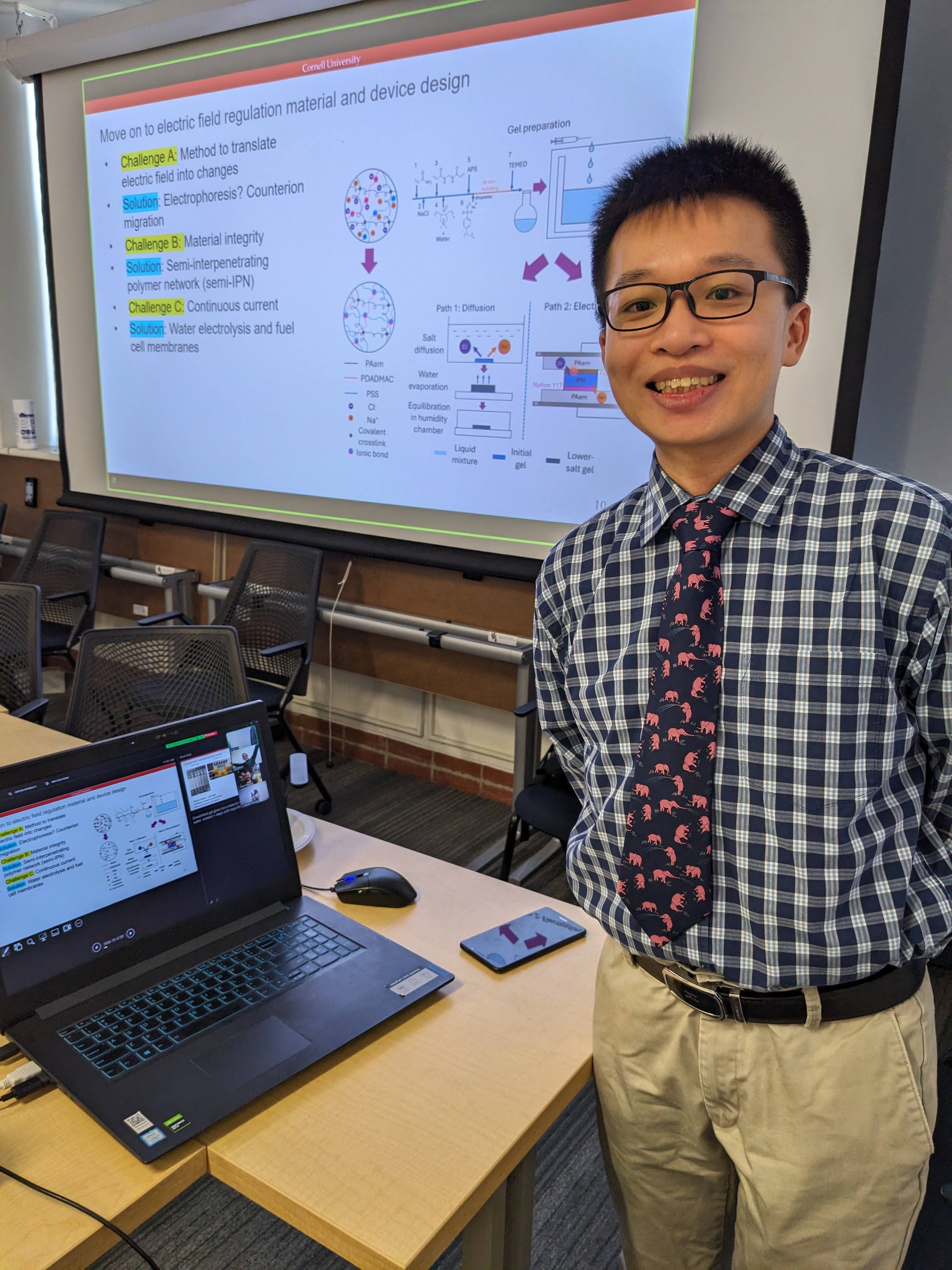

Max Tepermeister and Si Chen participated Complex Active and Adaptive Material Systems Gordon Research Seminar and Gordon Research Conference at the end of January in sunny Ventura, CA. This year’s theme was Active and Biomimetic Materials That Embody Intelligence. Si presented her work on engineering mechanics and growth of plant leaves. And Max won best speaker at the GRS presenting on his ionic material and system modeling tool and its applications for designing soft robotic systems!

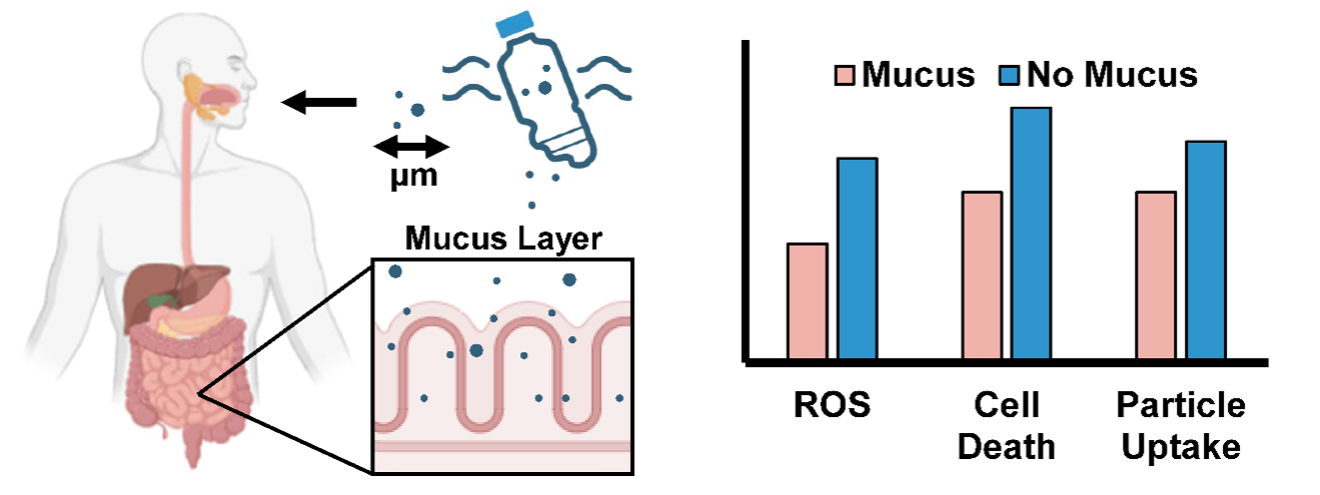
Our latest paper “The Role of Human Intestinal Mucus in the Prevention of Microplastic Uptake and Cell Damage” is now published in RSC Biomaterials Science. This work was led by PhD candidate Ellen van Wijngaarden, who is co-advised by Prof Ilana Brito of Cornell’s BME department. We used intact human intestinal mucus layers to best match in vivo material properties and study the effects of microplastics on cells. Our study investigated a broad range of microplastic sizes and materials and identified specific compositions that pose an increased risk to human health. This work highlights the protective role of the intestinal mucus layer in preventing cell cytotoxicity, inflammation, and particle uptake due to microplastics and the toxins they may carry.
 Mechanics for Material Design